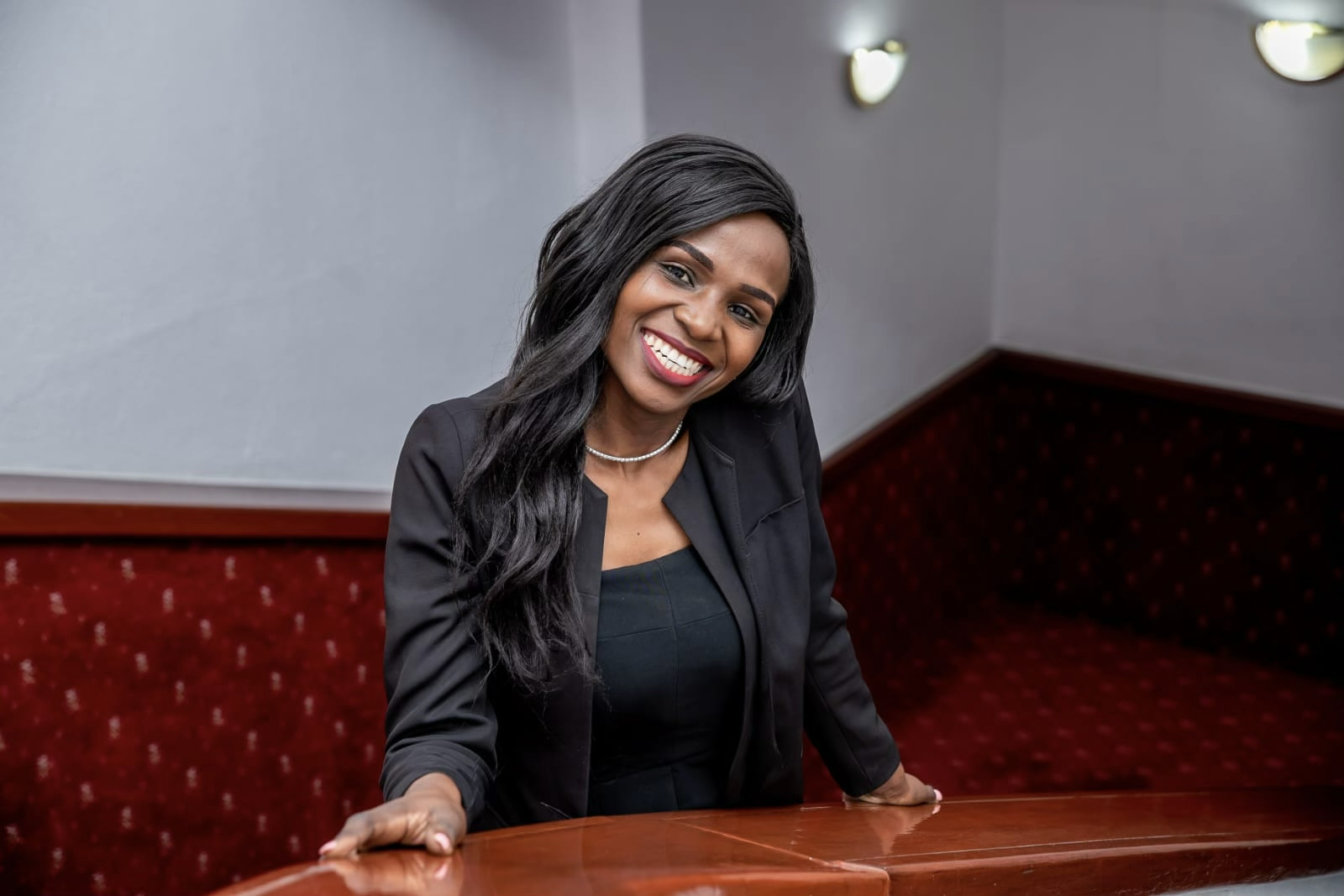
Mercy has built a career around solving complex problems, from engineering to building partnerships. She uses her engineering background, systems thinking, and experience in stakeholder engagement to help turn ideas into practical solutions.
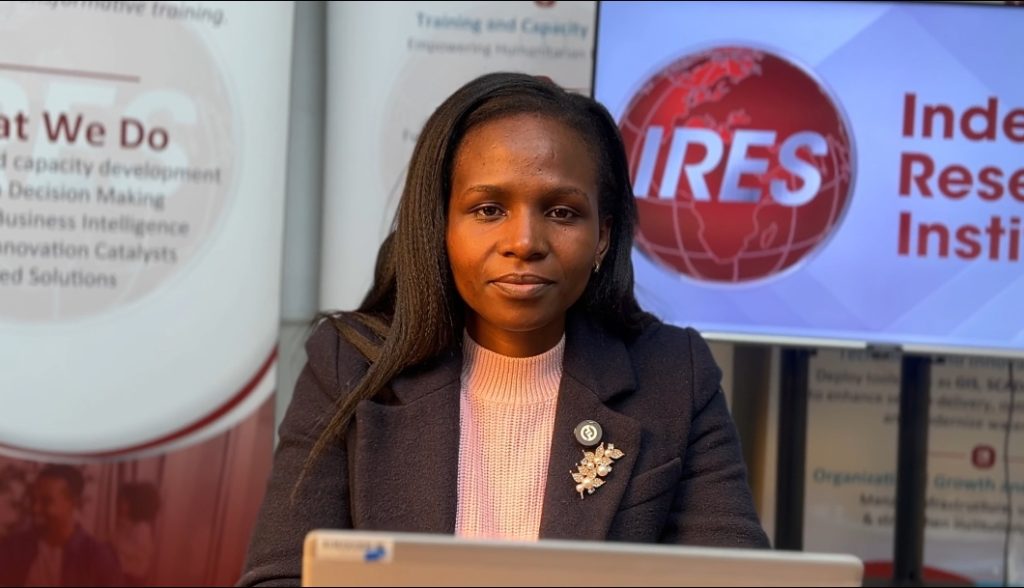
Hello Mercy. Welcome to Words That Count. Thank you for volunteering to share your STEM journey with the world through our work
Thank you for reaching out. I truly appreciate this opportunity and thank Eng. Winfred Mutinda for the nomination.
Let us begin with a brief introduction about yourself
My name is Mercy Kwiya. I am Kenyan and currently based in Nairobi, Kenya. I currently work as a Partnerships and Solutions Architect at Indepth Research Institute (IRES). Here, I work at the intersection of engineering solutions development, systems, and partnerships.
Previously, I worked as a fiber infrastructure planning and design engineer at Liquid Intelligent Technologies. I gained this opportunity through the Presidential Digitalent Program’s private-sector internship, following a public-sector deployment at the Ministry of Energy.
In between these technical roles, I worked with a human resources company as a Career Development Coach. That experience has continued to shape how I understand people, skills, careers, and the systems that connect them to opportunities.
These transitions were not necessarily planned, but looking back, each experience has built on the previous one. They have gradually shaped me into someone who is deeply curious about engineering, systems, and people. Most importantly, I have learned how the three can come together to create meaningful solutions and opportunities.
Walk us through your journey in engineering and how you transitioned into partnerships and solutions architecture
I am the firstborn in a family of five. I was born in Nairobi, with a just-okay early childhood. Being the firstborn, I was and still am deeply loved by my parents. Like many firstborns, I was the kind of child who listened, obeyed, and tried to do what was expected of me.
But I was also playful and curious. I loved creating things and could completely lose myself in games. I was often the child who came home the dirtiest because I had been fully immersed in whatever adventure I had found.
At the age of five, however, my life changed when we moved from Nairobi to our village, Mbitini in Kitui. That move introduced me to a very different environment and became the beginning of experiences that would shape the person I am today.
My father is a public servant and, at the time, he had been transferred to Moyale, which was then known for insecurity. My parents made the decision to move us to the village while my father took up his new posting. Looking back, I recognise this as one of the many choices my parents made out of love and a desire to give us a safe and better life.
I had already started my early education in Nairobi, so moving to Mwinzengi Primary School was a significant transition. I had to adjust to a completely different environment, a new school, and the challenge of finding where I belonged. But I adapted quickly.
I remember the time my mother left to further her education for two years when I was in Class Five. My siblings and I stayed in the care of our grandmother. Once again, I found myself carrying responsibilities at an age when I was still a child.
In school, I was naturally drawn to learning, particularly the sciences and mathematics. I often found myself taking the lead academically. It was no surprise when I excelled in my KCPE examinations and joined Mbitini Girls Secondary School.

I looked up to my father and wanted to be like him, a meteorologist. However, when he looked at my secondary school grades, he believed I could go further than him if I pursued engineering at university. Since he was working in Voi at the time, he helped me secure admission to study Mining and Mineral Processing Engineering at Taita Taveta University.
It was a natural fit. I had always been strong in Physics, Chemistry, Mathematics and Geography, and engineering gave me a way to bring those interests together. But university gave me more than an engineering degree. It gave me moments that challenged the way I saw myself.
During my third year, I was selected on merit for a DAAD-sponsored CEMEREM Student Exchange in Germany. Here, I had the opportunity to study and conduct research at HTW Dresden and TU Bergakademie Freiberg.
We developed research posters on environmental and resource management in Germany. My poster, “Aspects of Environmental and Resource Management in Germany,” was selected as the Best Research Poster at HTW Dresden in 2017. That moment meant much more to me than an award.
For someone who had grown up navigating fear, uncertainty, and questions about where she belonged, being recognised in an international academic environment validated something I was only beginning to understand. It made me realize that I was capable. It also gave me a confidence I had not experienced before and motivated me to push myself further.
Then life gave me another unexpected transition.
Just before my final examinations, I became a mother to my firstborn son. It was one of the hardest transitions I had experienced, but also one of the most meaningful. I completed my examinations, performed well, and graduated within the expected completion period.
When I transitioned into the workplace, I carried with me a strong sense of responsibility. I knew I had to create opportunities for myself. So, I became intentional and persistent about building my career.
My career has since taken me through different spaces. I worked on the technical side in fibre infrastructure planning and design, and also as a Career Development Coach. These experiences have helped me to understand the relationship between people’s skills, identities, careers and opportunities.
At first, these transitions did not appear connected. I was moving between engineering, infrastructure, career development, and people-focused work. But over time, I began to see a pattern. I was increasingly drawn to understanding how things work, how systems connect, and how people navigate those systems.
Today, I work as a Partnerships and Solutions Architect at Indepth Research Institute, at the intersection of engineering solutions, systems, and partnerships.
I have also founded Élever Africa, built around a belief that a career is not a single job or title. It is a portfolio of skills, experiences and capabilities that can be intentionally developed and positioned across different opportunities.
For a long time, I struggled with the idea that I needed to choose one thing and build my entire career in one direction. We are often told to specialise, focus, and follow one clearly defined path. But my own journey kept revealing something different. I was not becoming less focused by exploring different dimensions of my capabilities. I was becoming more complete.
Through Élever Africa, I help professionals mine their inherent skills and transferable value, refine how they position and communicate that value, and trade it deliberately for income, impact, and opportunity.
When I look back on my journey, none of the transitions I had were part of one carefully designed plan. From Nairobi to Mbitini, school to responsibility, engineering to infrastructure, then people and careers, and finally, from simply building my own career to helping others build theirs. Each of these chapters added something to the next.
The engineer in me learned to think in systems. I learned to see and understand people as a career coach. The partnerships professional in me learned to connect possibilities. And the experiences of my life taught me resilience, empathy, and service.
Today, I am deeply curious about engineering, systems, and people and the possibilities that emerge when we bring all three together.
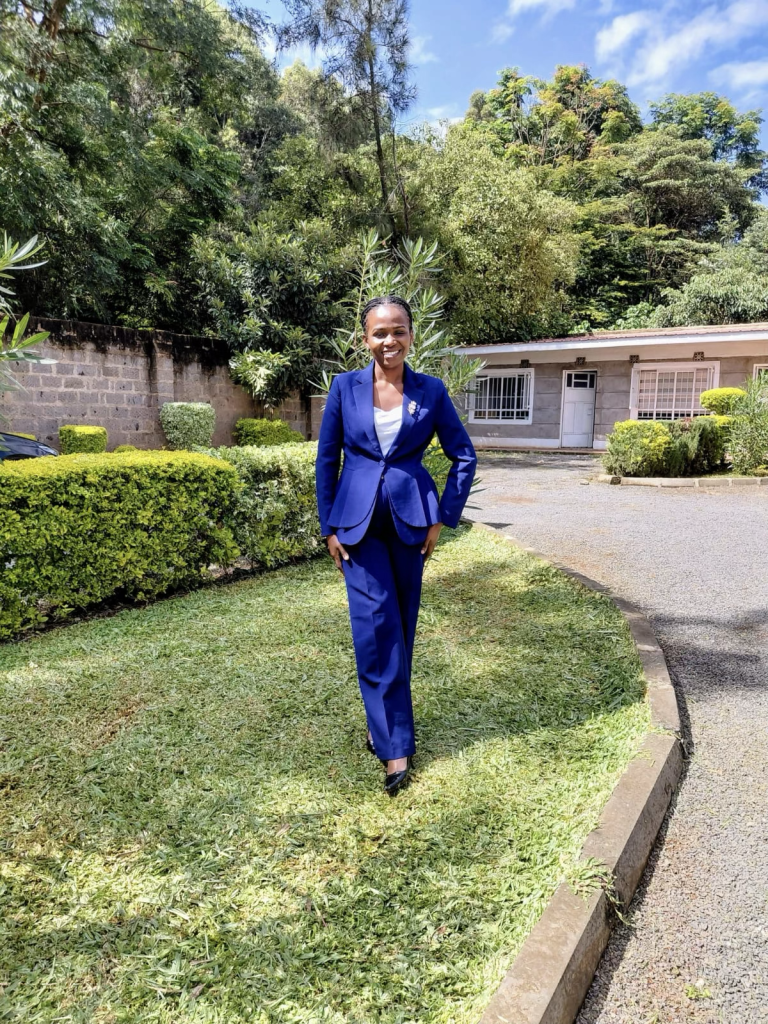
What have you found to be most challenging while building your engineering career?
One of the biggest challenges for me was being a multi-talented individual in a culture that encouraged finding one career path and moving with it. I have always had different interests and passions, and for a long time, that felt more like a disadvantage than an advantage. It was confusing to feel like I had to choose one part of myself and leave the rest behind if I wanted to be successful.
I struggled with questions like: Which one should I pursue? What happens to everything else I am interested in? How do I build a career when I don’t fit neatly into one box? Over time, I began to understand that I did not need to choose between the different things I was passionate about. I needed to learn how to connect them.
My engineering background, my experience working with people and careers, my interest in systems, and my work in partnerships are not separate versions of me. They are different parts of the same person and have each contributed to how I solve problems, understand people and create solutions today.
That realisation has changed how I approach my career. I no longer see being multi-talented as a lack of focus. It is a responsibility to understand my different strengths, integrate them and find meaningful ways to use them. I am still learning how to do that, but today I am much more comfortable with the fact that my path does not have to look like everyone else’s to be meaningful.
Alongside this was fear and self-doubt. There were times when I did not fully recognise the value of what I carried. That feeling limited the possibilities I allowed myself to explore. Sometimes, the biggest barrier was not that an opportunity did not exist. It was rather me not believing that I was ready or capable enough to pursue it.
In 2022, I was involved in an accident that left me immobile for almost six months. It was a painful season: the kind of pain that forces you to stop and ask deeper questions about life. Being unable to move at the pace I was used to gave me time to confront questions I had carried quietly for years: Why am I here? What am I building? What is the purpose of my life?
It was also the season when my faith became personal. Having grown in a Christian home, I had heard about God. I had heard people’s stories about who He is and what He could do. But in that season, I found myself saying, “I have heard that God exists. I want to know Him for myself. Not through the stories I have heard, but through my own experience of Him.”
There were moments of anger, fear, resentment and uncertainty. But there was also an invitation to slow down, to look inward and to seek God in a way I had never done before.
That season changed me. It deepened my relationship with God, challenged how I understood my identity and purpose, and changed what I wanted my life to be about.
I came out of it with a different understanding of life: I did not just want to build a successful life; I wanted to build a purposeful one.
Another experience that shaped me happened during my primary school years. My father had visited us, bought me a bicycle and returned to work. In our village at the time, owning a bicycle was a big deal. Unfortunately, it may also have created the impression that there was money in our home. One night, robbers broke into our house.
I woke up in the middle of the chaos. It was scary hearing them demanding money from my mother in loud voices and seeing the machetes they were carrying. I remember asking my mother, “Can I help you look for the money?” She sustained a serious injury to her hand while protecting herself from a machete blow aimed at her neck.
For days, weeks and even months afterwards, we struggled to sleep at home and often sought safety at our neighbours’ houses. Nights became associated with fear. That experience taught me something very early: security and stability are not things we should take for granted. They are things we intentionally build.
Looking back, many of the things that felt difficult at the time became the very things that strengthened me. I learned to keep going, to adapt and to find a way forward even when circumstances changed.
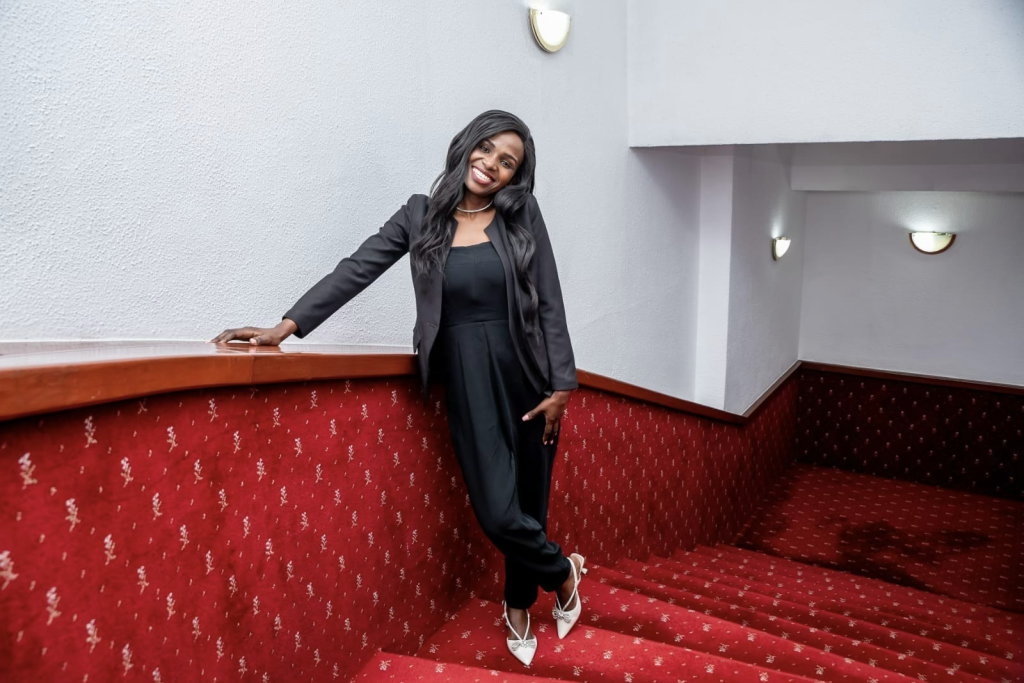
What can you say have been some of your biggest sources of motivation when faced with challenging times?
What has inspired me most to keep moving forward is the understanding that I am on earth on purpose. The good, the bad, and everything in between, the life experiences I have lived through have shaped my journey and made it uniquely mine. They have given me experiences, lessons and perspectives that I believe have equipped me for the purpose God created me for.
That understanding keeps me moving, even when I do not understand why I am going through a particular season. I have learned to trust that it is part of my journey and that there is something in it that is shaping me for what I am called to do. I am therefore inspired to keep learning, growing, building and serving, knowing that my journey has purpose and that I have a responsibility to make the most of what I have been given.
Growing up, I was also deeply inspired by my father – he is a meteorologist. I watched people in the village try to explain what he did. Some would say he “flies aeroplanes”. Others would say he “measures the air.” I did not always understand the technical details, but I understood that he worked with science and that his work mattered. I wanted to become like him.
Along the journey, I have also been fortunate to have purpose-driven mentors who have helped me see possibilities in myself that I could not always see on my own. One of those people is Engineer Winfred Mutinda, whose mentorship and encouragement have been meaningful in my journey.
One of the things life has revealed to me is that people naturally come to me for advice, guidance and help navigating difficult questions about their careers and lives. I began to realise that perhaps this, too, was part of the pattern in my journey.
I had spent years learning how to navigate transitions myself. Now I was increasingly being called upon to help other people navigate theirs. And that has become an important part of who I am. Today, service is at the centre of what I do.
Tell us about the most prestigious moments along your engineering career journey
Some of my most meaningful moments have been the recognitions that came from people whose lives I have impacted.
Receiving messages from people telling me that something I said, taught or shared changed how they saw themselves, helped them make a decision or gave them courage to take their next step has been more rewarding to me than any formal recognition. Those messages remind me that what I carry can have a life beyond me.
Professionally, a few milestones stand out: winning Best Research Poster at HTW Dresden in 2017 during my DAAD-sponsored exchange; representing the Children and Youth Major Working Group to UNEP at a regional consultative workshop on critical energy transition minerals; and publishing my book, The Generation We Are Raising.
But if I had to choose what I consider my greatest recognition, it would be the gratitude from people who tell me that my words, guidance or work changed something in their lives. That is the kind of impact I want my career and life to be remembered for.
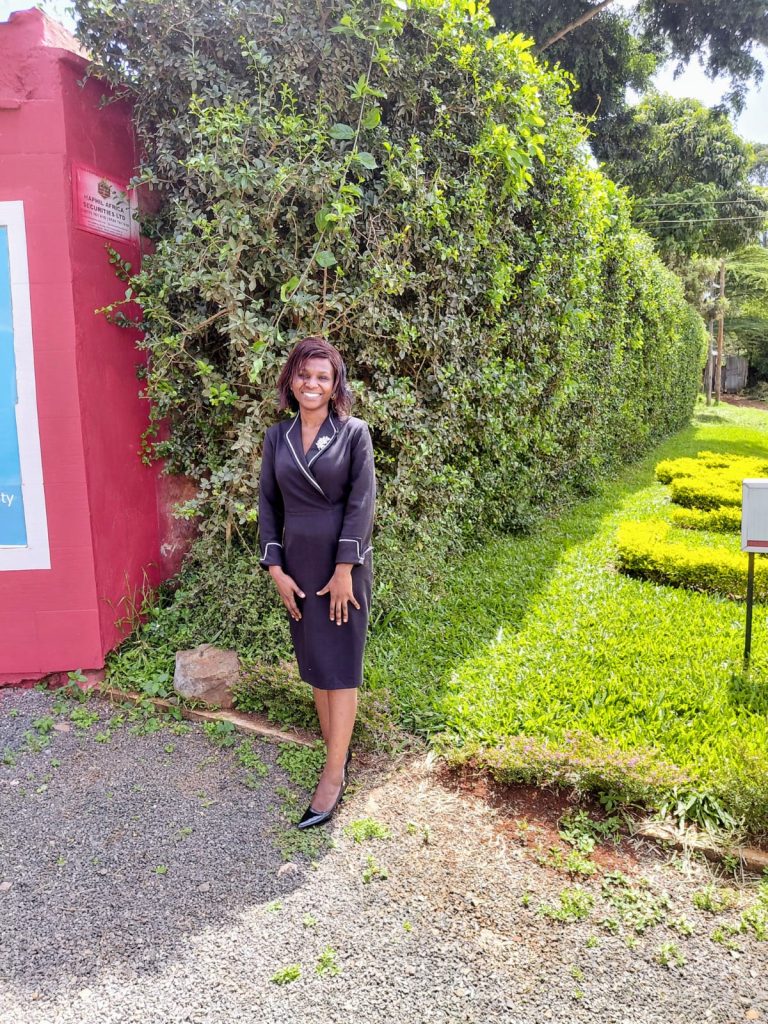
Who is Mercy outside of the engineering, career development and strategic thinking walls?
Outside of work, I am a mother, a daughter, a sister, a friend and a lifelong learner.
I enjoy conversations around family because, at the centre of everything we do, are people who are born, shaped and raised within families. I often find myself thinking about how much our upbringing influences who we become, the choices we make and the lives we eventually build.
This curiosity inspired me to write my book, The Generation We Are Raising. I kept asking myself: What kind of generation are we creating through the way we raise our children? As professionals, especially as engineers and people who spend so much of our lives building, solving and achieving, how intentional are we about building the people who will carry what we have built forward?
For me, parenting is not only about raising children who succeed. It is about intentionally shaping people who can carry values, wisdom and impact beyond our own lifetime.
I love creating and being in spaces where people can have meaningful conversations, learn, connect, discover themselves and think deeply about what they are building not just in their careers, but in their families and communities.
Other things I love are singing, dancing, and listening to good music. Because I enjoy nature walks, living in Nairobi has made Karura Forest one of my favourite places. I love travelling, exploring Kenya and taking in its different landscapes and green spaces.
Naturally, I am curious about people and the world around me. I love asking questions, observing, analysing and understanding why people do things the way they do. Often, I find myself looking beyond what is visible, trying to understand the experiences, beliefs and systems that shape how people think, behave and make decisions.
I am someone who loves people, nature, learning, meaningful conversations and understanding what makes things and people work.
I also volunteer with organisations such as Tubariki Mentorship and Collaboration Network, because I believe that what we learn and become should create opportunities for someone else.
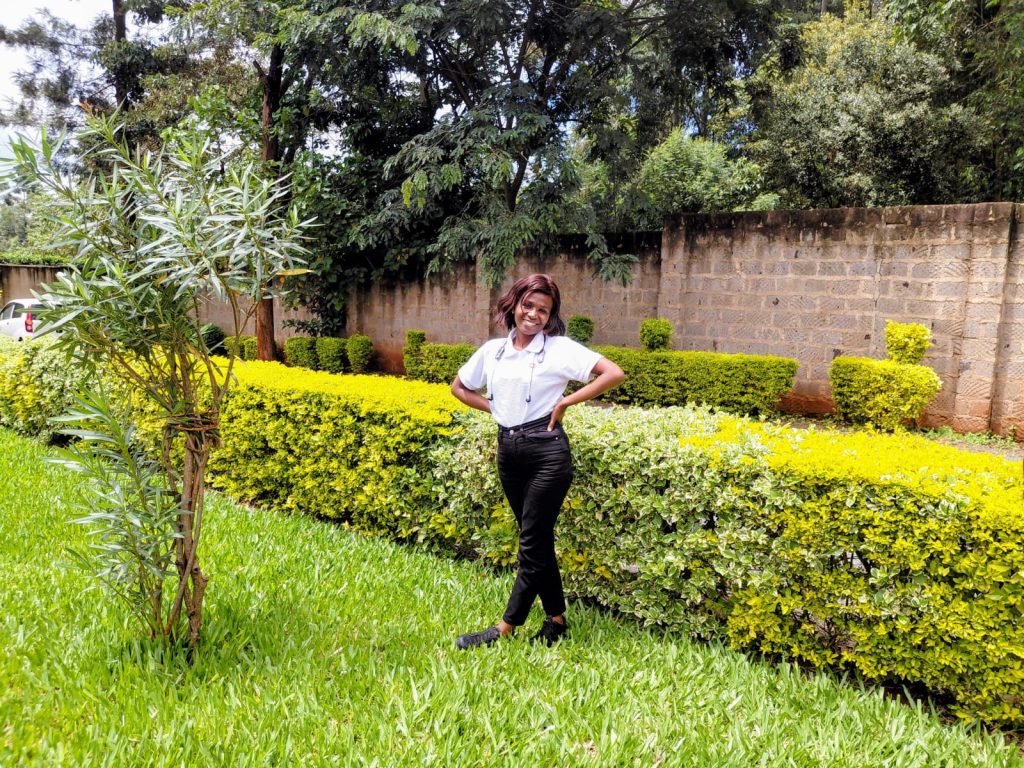
What is your favorite quote?
I don’t have a favorite quote but this is what I deeply believe. “Your greatest advantage is becoming fully aware of what only you can bring, refining it, and learning how to exchange it for value”.
What are your words of encouragement for a young girl who is passionate about engineering or STEM in general?
My STEM journey has taught me that sometimes our paths do not always make sense while we are walking them. It is only when we look back that we realise every transition was preparing us for who we were becoming.
So, to the young girl out there, you are capable. Do not underestimate yourself simply because you are a woman. Women in STEM bring unique strengths, perspectives and ways of thinking that are valuable to the field. Your ability to see connections, understand people, adapt, collaborate, manage multiple priorities and bring different perspectives to complex engineering problems can make you an invaluable part of any team.
You do not have to become a copy of the people already in the room. Bring your full self into the room.
Learn the technical skills. Ask questions. Build your confidence. Take up space. Find mentors. And when opportunities come, do not wait until you feel completely ready.
Most importantly, do not allow fear or self-doubt to convince you that you are less capable than you are.
There is room for you in STEM and there are problems in the world that need the contribution that only you can bring.
Thank you for the wonderful time, Mercy. And for teaching us about what we can use our engineering passion for. We wish you all the best in your work and look forward to celebrating you more in the future.


One Comment
What an inspirational story Mercy! I have actually learnt so much about you that I didn’t know. I loved this statement “The engineer in me learned to think in systems. I learned to see and understand people as a career coach. The partnerships professional in me learned to connect possibilities. And the experiences of my life taught me resilience, empathy, and service.”
Keep winning, thriving and serving others!