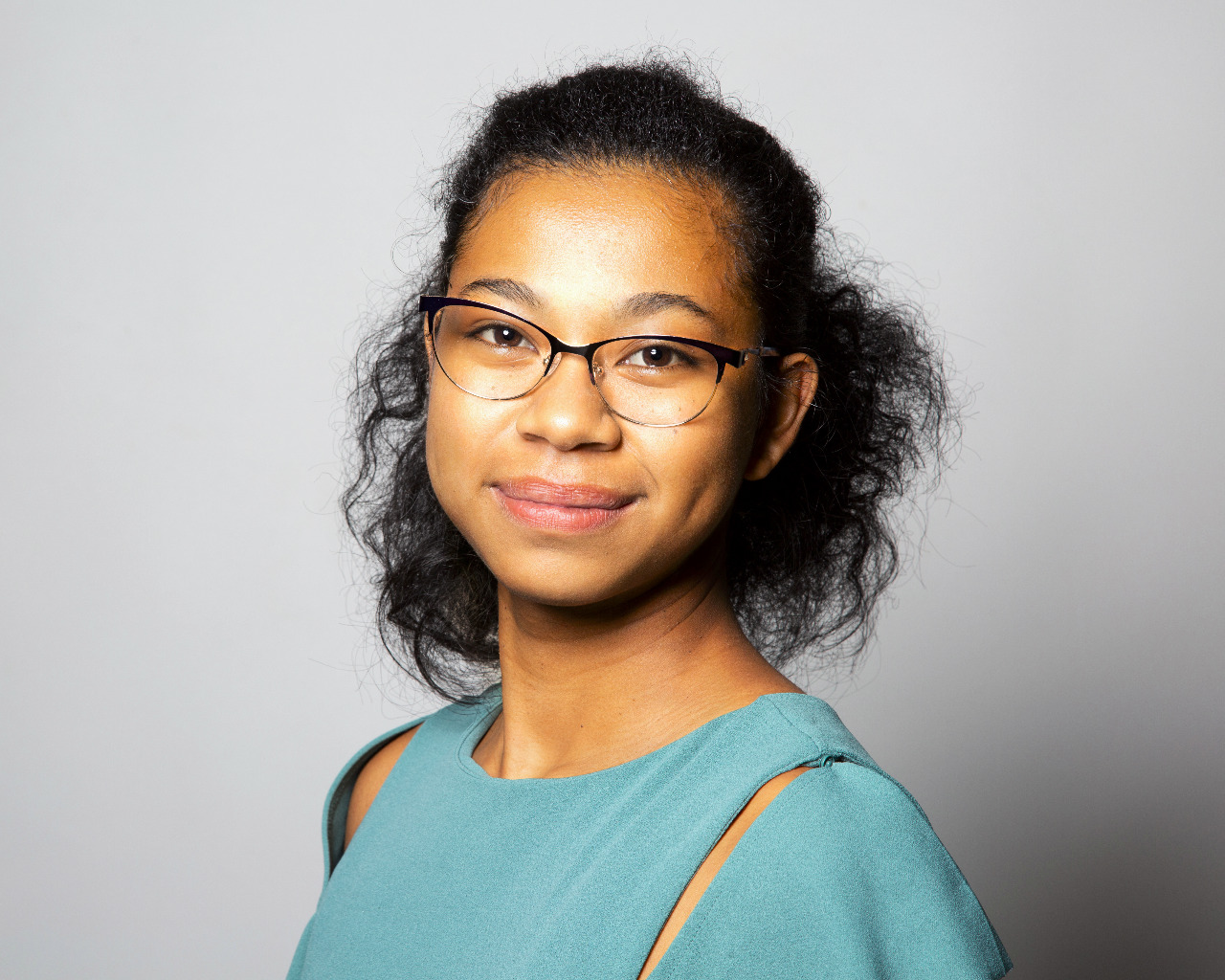
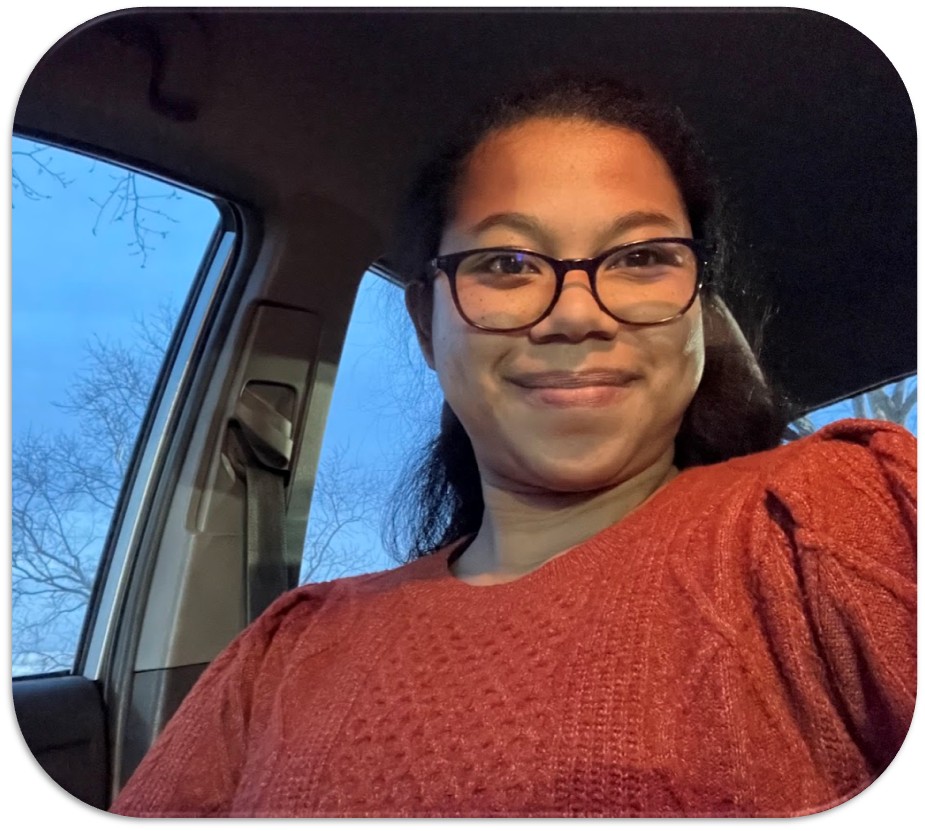
Antsa Pierrottet is a PhD candidate in Mathematics at Clemson University, where she researches post-quantum cryptography. Her work focuses on developing and testing cryptographic systems that can protect data against potential attacks from future quantum computers.
Alongside her research, Antsa teaches mathematics and is pursuing a graduate certificate in engineering and science education. She also writes about her academic experiences online, sharing the realities of studying, preparing for examinations, and navigating life as a researcher.
In this episode, she explains her research, reflects on her academic path, and shares why she believes scientists should make their work easier for others to understand.
Hi Antsa. It is an honor to have this conversation with you today. We can’t wait to learn about your work in STEM
Thank you for reaching out and to Larissa Ramaromanana for the nomination. I am happy to share my story and some of the lessons I’ve learned along the way. This is mainly because I would have loved reading such a story when I was younger. And, I believe that people should use their brain power to solve real open problems instead of reinventing the wheel.
Could you briefly introduce yourself and tell us what you do?
My name is Antsa Pierrottet, and I am a PhD candidate in Mathematics at Clemson University. My research is in post-quantum cryptography, which is about protecting our data against future quantum computers that could break some of the cryptographic systems we currently use.
I am also pursuing a graduate certificate in engineering and science education. It trains me to apply research findings in my mathematics classroom and conduct research on my own students so that I can improve my teaching practice.
I am currently a Graduate Teacher of Record too, which means I teach my own mathematics class. This semester, I am teaching Business Calculus II. Over the past three years, I have alternated between teaching my own class in the fall and working as a graduate teaching assistant in the spring, helping a professor with their class.
I have also started documenting my academic experience online, through social media and writing platforms such as Substack. Some of the things I talk about include: how I prepare for examinations, how I learned English, how I approached English tests, and how I prepared my thesis. I talk about the milestones that are part of student life and create educational content as well.
Outside academia, I am a wife, a mother to a 12-year-old, a sister, a church member and a friend.
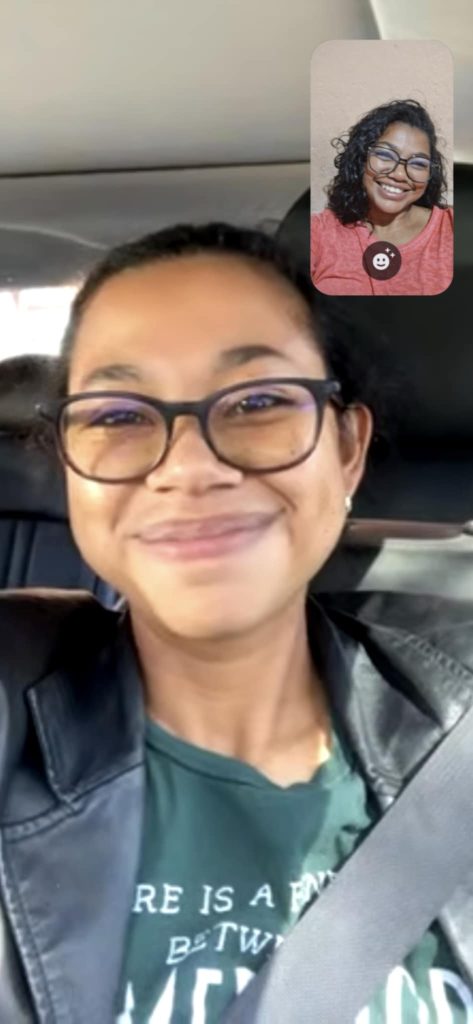
What exactly is post-quantum cryptography, and why does it matter?
We use encryption to protect our data. Think about emails, for example. The information is transformed into a form that people who are not supposed to read it cannot understand. When it reaches the intended recipient, they can decrypt it and read the message. This happens in the background when we use our computers.
The cryptographic systems we currently use, including RSA and Diffie-Hellman, have been effective against conventional computers. However, quantum computing has the potential to change that. Some of the mathematical problems that make current encryption difficult to break could become much easier for sufficiently capable quantum computers.
Quantum computing could bring advances in fields such as medicine, engineering, economics and finance. But powerful new technologies can also create challenges, and one of those challenges is the security of our information.
That is why researchers are looking for new algorithms that can still run on our ordinary computers but remain secure against attacks from quantum computers.
In the United States, a major step in this area came in 2016. The National Institute of Standards and Technology invited researchers to submit algorithms for evaluation. Some researchers develop algorithms, while others try to break them and identify vulnerabilities. This process helps the community assess and improve their security.
My work focuses largely on cryptanalysis. I study how cryptographic algorithms might be broken, what vulnerabilities they may have, and how we can strengthen the systems we use. I also explore possible applications and ways different approaches might be combined.
It is important to distinguish post-quantum cryptography from quantum cryptography.
Quantum cryptography uses principles of quantum physics to support cryptographic processes. Post-quantum cryptography, which is my field, develops mathematical and computational methods designed to withstand attacks from quantum computers while continuing to run on conventional computers.
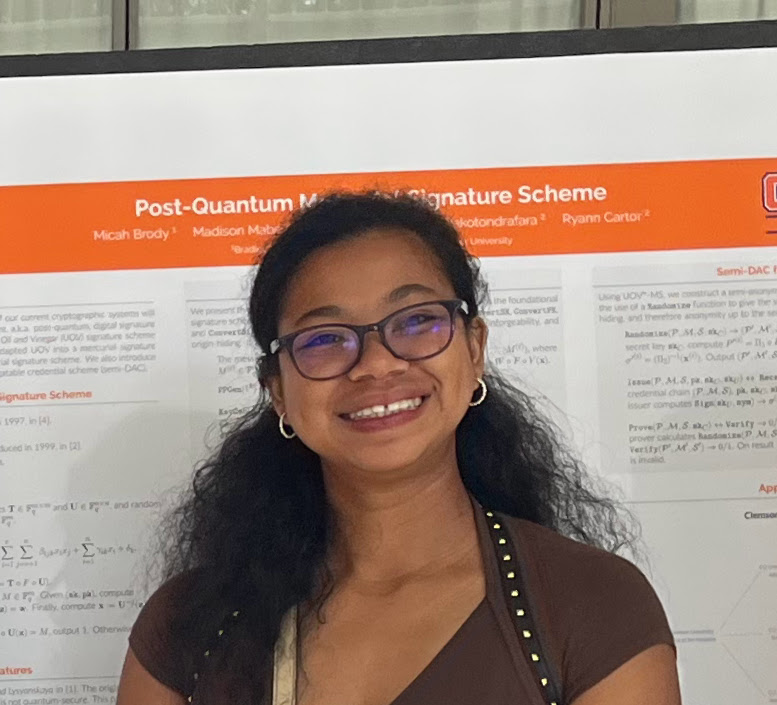
How did you find your way into mathematics and post-quantum cryptography?
My academic path has been quite windy.
Growing up, my dream was simple: I wanted to be an elementary school teacher. By the end of high school, that goal evolved into becoming a high school physics professor. This led me to enroll in a specialized teacher training center (École Normale Supérieure). However, once I got there, I realized I was falling in love with the complex mathematics behind the physics rather than the physics itself.
I switched my major to mathematics education at the end of my first year.
The real game-changer happened during my third year in a number theory class. My professor introduced us to cryptography. He explained how abstract math could stop tech-savvy thieves from stealing money from our bank accounts just by standing near your debit card. I was completely captivated.
Around that same time, my teaching dreams grew bigger. I realized that I wanted to teach teachers how to teach. To do that at the university level, I knew I needed a PhD.
This ambition opened doors I never imagined. I earned a scholarship to the African Institute for Mathematical Sciences (AIMS) for a Master’s degree. This is where I met a visiting professor from Clemson University. Moving to the United States had never been on my radar, but that single connection changed my entire trajectory.
Right after COVID-19, I moved to the U.S. to begin graduate school at Clemson. During a first-year orientation seminar, I approached the only woman in the department researching cryptography. She also happened to be my linear algebra professor. I loved her teaching style. So, with a lot of bold innocence, I walked up and told her I wanted to do my Master’s and PhD with her. I didn’t know back then that you’re supposed to “shop around” for advisors. But luckily, she took me on as her very first PhD student. It has been a perfect fit since then.
Today, I am exactly where I belong. My road has allowed me to beautifully bridge my love for advanced mathematics with my lifelong passion for training the next generation of educators.
You are doing research, teaching, and documenting your academic experience online. What made you start sharing that experience?
I started documenting my academic journey because I wanted to share what I was learning and experiencing. I talk about things such as preparing for exams, learning English, and taking English tests.
These are milestones that define a student’s life, but people do not always talk about the practical details involved in reaching them.
I hope that someone somewhere will have a background similar to mine and find something useful in what I share. Sometimes, seeing how another person approached a challenge can help you think about how to approach your own.
What are some of the biggest challenges you have faced while on your career journey?
I discovered I was pregnant at 15, right as I was entering the first semester of my undergraduate degree. My community’s reaction was devastating. People weaponized my academic success against me, asking how someone with such good grades could let this happen.
The judgment didn’t stop after I gave birth. Because I chose to keep going to college, juggling working and studying at the same time, I was labeled a ‘bad mom.’ Society tells women that pursuing an education means abandoning their children. This harsh standard is never applied to men who do the same. I constantly battled the internal guilt, questioning if I was neglecting my son.
But I knew the math of our future. A high school diploma wouldn’t give us the life we deserved. My education was our bridge. I was incredibly fortunate to have my mother, who stepped in to support me and shield me from the noise. She stayed by my side until she passed away right after my graduation. Her final, ultimate wish was to see me get my Master’s degree. Because of her foundation, I did it.
From that moment until today, how are you able to stay motivated when faced with challenging moments?
I recently wrote an essay about something I saw when I was very young. My mother had a science notebook, and written right at the beginning was a quote: ‘Who benefits from this in the future?’
That question stayed with me. It taught me that when you study, the person who stands to benefit the most is you. It isn’t the people on the outside judging you or saying, ‘You are this or you are that.’ It is me, my family, and my children.
When things get hard, it is incredibly tempting to just give up. Now that I have my Master’s degree, I often think, ‘I could easily leave this PhD behind. I would be perfectly fine with the degree and the salary I can make right now.’ But I remind myself that what I am doing today is an investment. I am the one putting in the sweat and enduring the sleepless nights. So I am the one who is going to reap the rewards. That thought inspires me to get up every day and do what needs to be done, no matter how overwhelming it feels.
Everything in life is a trade-off. You can choose to struggle now, or you can struggle later. Right now, I am in my late 20s. I am still young, and I still have the energy to push through long hours of simultaneous working and studying. When I get older, I won’t have that option anymore. I am choosing to make the sacrifice now, because I know exactly who I am doing it for.
What has been one of your most rewarding experiences as a researcher?
One thing that makes me happy is seeing people download my master’s thesis.
My advisor once shared an email with me in which someone at another university recommended my thesis as a reference. I could also see that people from different countries, including China, Canada and Germany, had downloaded it.
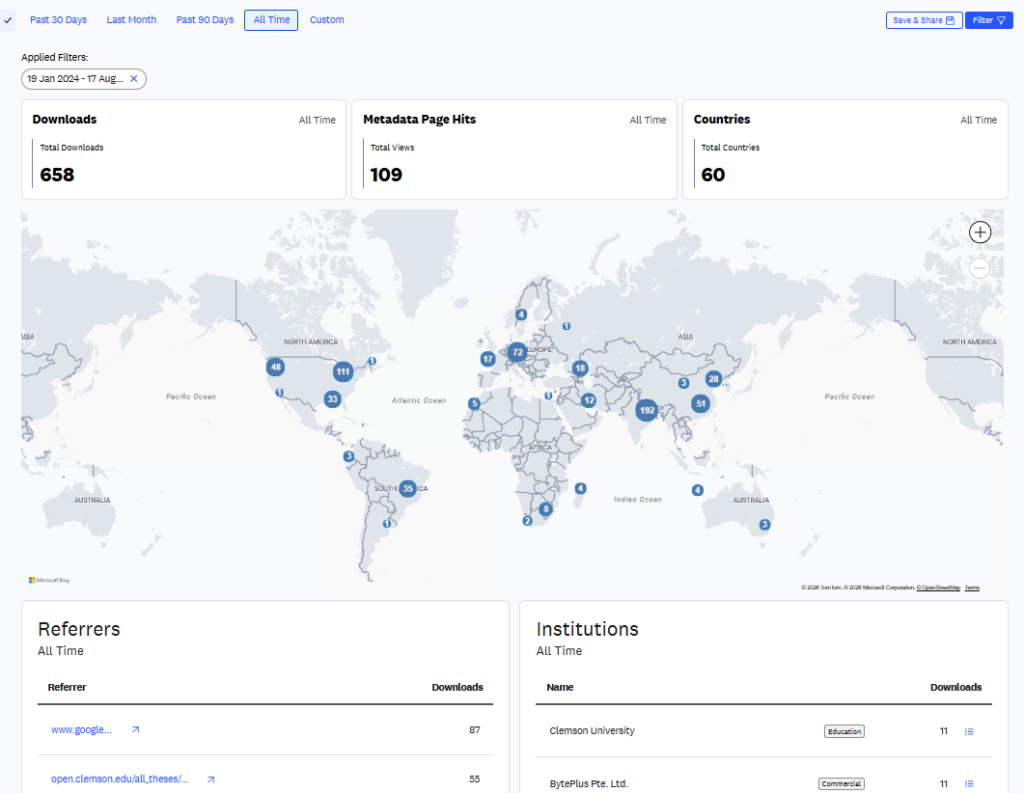
That made me happy because it showed that someone could find my work useful beyond the institution where I studied.
It also connects to something I care about: how we communicate scientific knowledge. Academic writing can be very technical and concentrated. Sometimes, a researcher from another field may struggle to understand the work, let alone someone without a scientific background.
I understand why scientific writing needs rigour, but I also believe we need to explain our work in ways that more people can understand.
Why is communicating research to a wider audience important to you?
I think there is a gap in scientific writing when it comes to making research accessible to a wider audience.
In academia, researchers are often expected to focus on presenting their results and removing background information that other specialists are assumed to know. There are conventions around how a scholarly paper should be written. Writing for a broader audience is not always rewarded in the same way.
But the world is increasingly interconnected. Someone working in one field should be able to understand what a researcher in another field is doing, at least at a basic level, without having to work through so much specialised language.
You never know who might understand your idea and develop it further, or approach it from a different perspective. If we make our work difficult to understand, we may limit who can engage with it.
I am a scientist, and I understand the need for rigour. But I am not a fan of using jargon when a clearer explanation is possible.
You also won first prize in the Pan-African STM Cinema Competition in 2024. What did that experience mean to you?
The Pan-African STM Cinema Competition (PASTMCC) was open to people with African citizenship, and I won first prize for a video about cryptography.
The organisers highlighted the clarity of my explanation. I was explaining a basic concept, but the way I communicated it was important.
That meant a lot to me because I care about helping people understand scientific ideas. You never know who might take an idea further once they understand it. Someone may approach it differently or develop it in a way you had not imagined.
For me, explaining something clearly is an important part of sharing knowledge.
What do you enjoy doing outside your academic work?
I enjoy writing and reading.
People may think that I spend all my time working on a computer, but not everything I do is mathematics research. Sometimes I am simply writing or reading.
My husband and I also enjoy listening to fiction stories together. Recently, we have been listening to Brandon Sanderson‘s epic fantasy books. I also enjoy watching documentary videos with my son.
Is there a quote or principle that you find yourself returning to?
There is a quote I found in my mother’s notebook. I do not know whether she came up with it herself or found it somewhere, but it says: “Who benefits from this in the future?”
I think it is a strong question. It makes you think about the consequences of what you are doing and who might benefit from it later.
What advice would you give a young African girl who wants to pursue post-quantum cryptography?
I would say that many people will not understand what you are doing, but you should talk to the people who are doing the work. Reach out to them and learn about the field from people who are actively involved in it.
Sometimes, we become discouraged because we are talking to people who cannot give us the guidance we need. They may have good intentions, but they may not know enough about the field to advise us.
It is better to speak to people who are pursuing what you want to do or who have already gained experience in it. Find those people and reach out to them.
You do not have to figure everything out by yourself. Connecting with people who understand the work can help you learn what the field involves and how to find your place in it.
Thank you, Antsa, for sharing your journey and for introducing us to the world of post-quantum cryptography. You have made us think about the further part of the future. We wish you the very best with your PhD and look forward to celebrating more of your success.


