
Space research relies on people who can turn complex ideas into missions that help us better understand our world and beyond. One of them is Larissa, an aerospace engineer whose work in satellite research and scientific collaboration is helping shape the future of space science: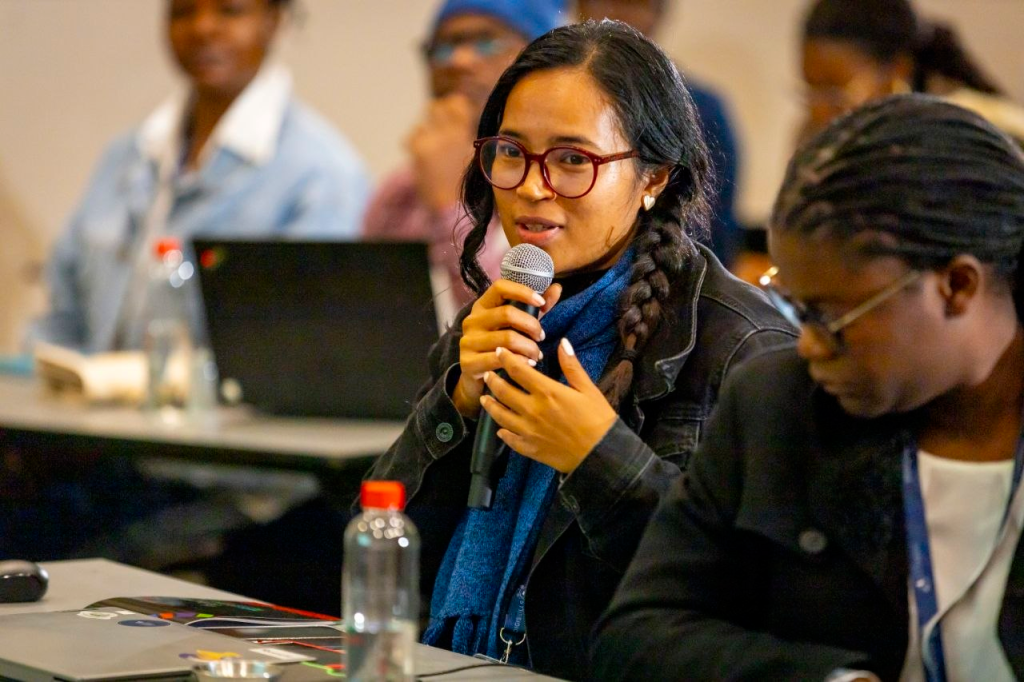 Hi Larissa, you are welcome to this episode of Words That Count. Thank you for joining us today
Thank you so much for reaching out. I’m especially grateful to Tinah Martin for thinking of me and recommending my story.
I’m honored by your invitation and delighted to be featured on Words That Count. If sharing my journey can encourage others, particularly young people interested in STEM and the space sector, it is such a privilege.
Let’s begin with a short introduction about who Larissa is
I usually introduce myself as Larissa Ramaromanana. I am Malagasy and currently live in Antananarivo, Madagascar. I recently returned to Madagascar after completing my aerospace engineering studies in Russia. At the moment, I am preparing for the next stage of my academic journey.
I am an aerospace engineer specializing in small satellites and nanosatellites. My main technical interests include orbital mechanics, satellite mission design, spacecraft operations, relative motion, and attitude and orbit control systems.
Typically, I work on the design and operation of small satellites, which are compact spacecraft used for activities such as Earth observation, scientific research, and communication. Part of what an aerospace engineer does is helping to plan satellite missions, monitoring how satellites perform once they are in space, and solving problems that may arise during their operation. I am particularly interested in developing technologies that make satellite missions safer, more efficient, and better able to navigate the increasingly crowded environment around Earth.
Currently, I serve as a Research Assistant Officer at SHE ORBITS. My role involves supporting research activities, scientific documentation, knowledge organization, and collaboration within an international community working in space research and innovation.
I am also involved in science communication and mentoring through collaborations with organizations such as LatSpace Technologies and MUBL Batch 2. Here, I help make space technology more accessible to students and early-career STEM enthusiasts. I have also been admitted to a Master’s Program, where I plan to deepen my knowledge of satellite systems, mission analysis, spacecraft operations, and control.
How did you get interested in aerospace engineering? Is this what you wanted to pursue as a career since childhood?
I grew up in Antananarivo in a modest family where education was deeply valued. Curiosity about science has always been part of me. As a child, I enjoyed reading science books, watching documentaries, and trying to understand how the world worked.
My fascination with space began when my brother brought an astronomy book home. I was captivated by the stars, planets, galaxies, and the immense scale of the universe. What affected me most was the realization of how small humanity is in such a vast environment, while at the same time being remarkably unique. However, I did not immediately know that aerospace engineering could become a real career for me.
My academic journey was not straightforward. I moved between schools during childhood. After completing high school, I explored different fields, including Medicine and Mathematics at the University of Antananarivo. I later interrupted my studies to work, earn an income, and build my family. Even during that period, my interest in space and astronautics never disappeared.
The story of Katherine Johnson, which I discovered through Hidden Figures, helped revive that interest. I was inspired not only by her intelligence, but also by the way she used mathematics to contribute to space exploration despite the barriers she faced.
I initially planned to return to Mathematics. While searching online for universities and scholarship opportunities, I discovered Samara National Research University in Russia and learned that international students could study aerospace-related programs there.
I remember asking myself, “Why not study aerospace engineering directly?” For the first time, I saw a concrete route into a field that had previously appeared distant and inaccessible. I discussed the opportunity with my husband and family, and they supported my decision. Later, I received a scholarship from the Russian government.
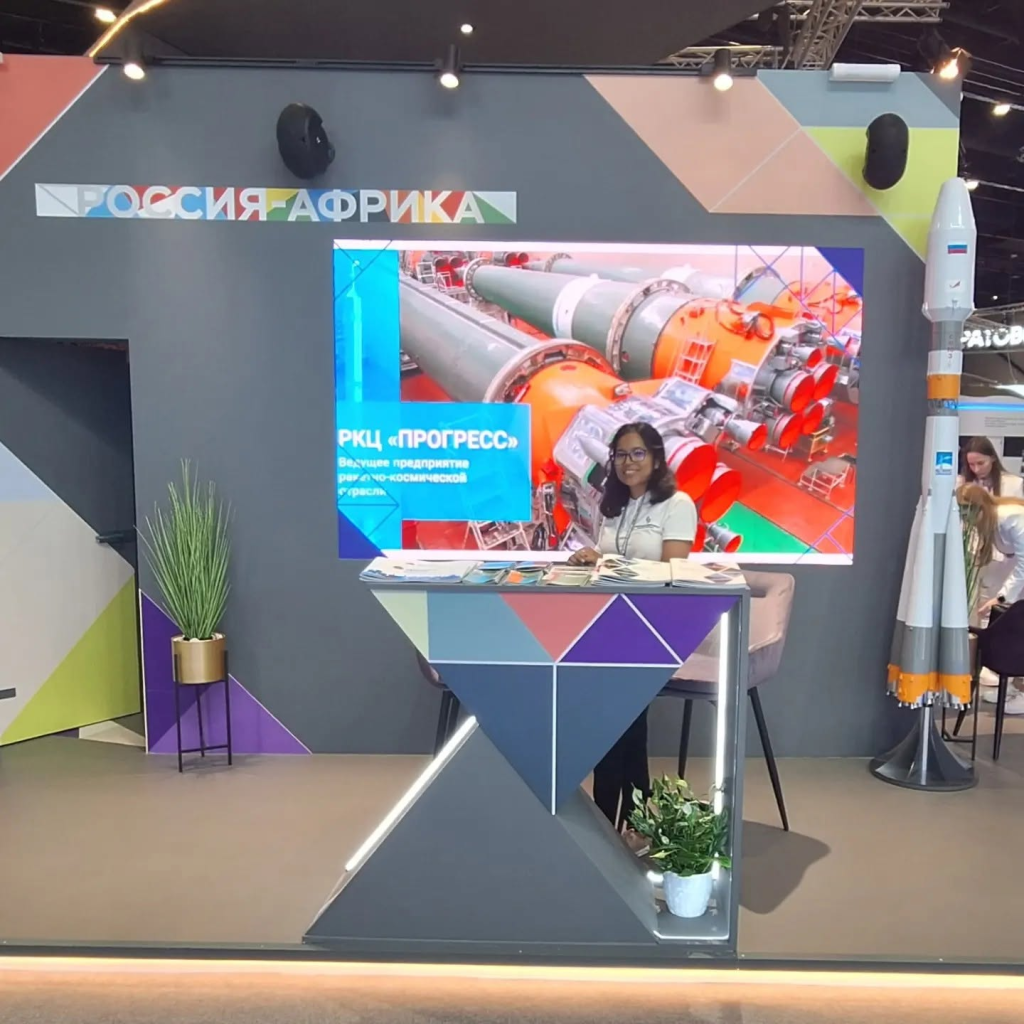
Because of the COVID-19 pandemic, I completed a one-year Russian-language preparatory program online from Madagascar. After finishing the program, I moved to Russia in 2021 to begin my aerospace studies at Samara National Research University. I studied Rocket Complexes and Astronautics, specializing in small-sized spacecraft and nanosatellites, and graduated in 2025.
What have been some of the most challenging moments along your career journey in aerospace engineering?
One of my first challenges was that aerospace engineering was not a visible career option while I was growing up. Madagascar did not have a developed space sector around me, and I did not personally know aerospace engineers whose paths I could follow. I had to discover the field independently and search for opportunities beyond my immediate environment.
The COVID-19 pandemic also affected the beginning of my journey. Instead of immediately moving to Russia, I completed my Russian-language preparatory year online from Madagascar. Learning a new language remotely, without being immersed in the culture or surrounded by native speakers, required discipline and patience.
When I finally moved to Russia in 2021, I had to adapt to a different climate, culture, education system, and language. Studying complex subjects such as orbital mechanics, spacecraft dynamics, electronics, programming, control systems, and advanced mathematics in Russian was demanding.
Studying abroad also meant spending long periods away from my husband, daughter, and extended family. That separation was emotionally difficult, especially while managing the pressure of an engineering program.
My journey was also different from the traditional academic path. I had changed fields, interrupted my studies, worked, and started a family before entering aerospace engineering. At times, I questioned whether I had started too late or whether the path was realistic.
Over time, I understood that a non-linear path does not mean a person lacks direction or ability. My earlier experiences gave me maturity, adaptability, discipline, and a clearer understanding of why I wanted to study.
How have you been able to stay motivated amidst these challenges?
Curiosity and a love of learning have always motivated me. My father often reminded us that even when you have little, knowledge can help you find a way forward, and he encouraged us to take our studies seriously.
My mother was equally supportive and also continued her own education after becoming a mother. Her example showed me that family responsibilities and academic ambition can coexist. Together, my parents taught me to see education as a source of independence, confidence, and opportunity.
My husband also played a central role in my journey. He supported my decision to return to university and pursue an opportunity abroad, even though it required major adjustments and sacrifices for our family.
My daughter gives my work an even deeper meaning. I want her to grow up knowing that women can become engineers, researchers, and contributors to fields that may initially appear inaccessible.
I am also inspired by what space technology can contribute to Madagascar and other African countries. Satellites can support environmental and weather monitoring, agriculture, mapping, communications, maritime surveillance, and disaster-risk management. Space engineering is therefore not separate from daily life. It can help countries understand their territories, protect communities, manage natural resources, and make informed decisions.
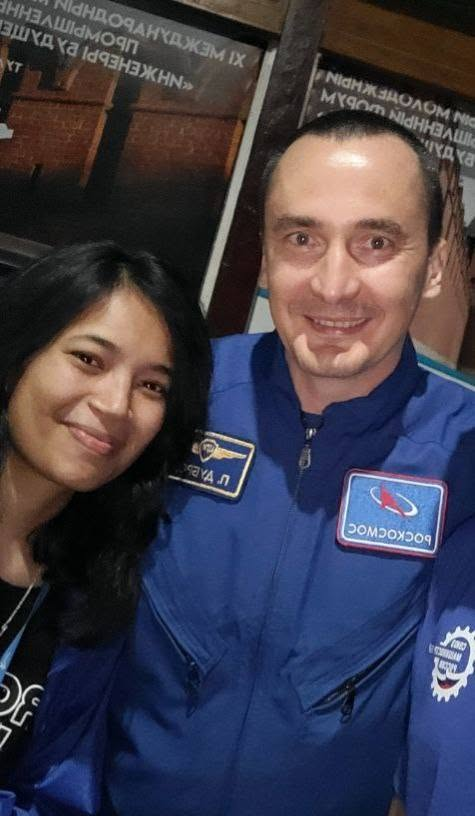
My long-term vision is for Madagascar and other African countries to become active contributors to the space sector rather than only consumers of satellite services. Sustainable national capacity requires local specialists who can define missions, analyse orbits, operate spacecraft, manage ground systems, process data, and train future professionals.
Let’s talk about the most prestigious moments you have encountered along your aerospace engineering career journey
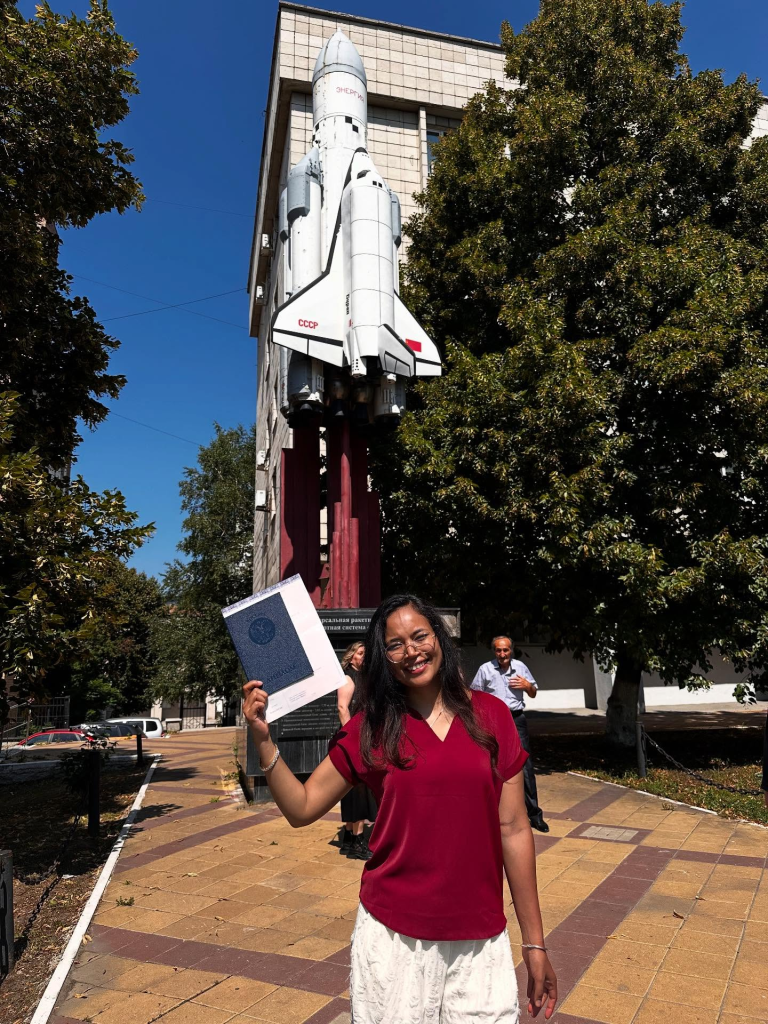
One of my most meaningful achievements was completing my degree in Rocket Complexes and Astronautics, with a specialization in small-sized spacecraft and nanosatellites, at Samara National Research University. The degree represented more than completing a curriculum. It showed me that a field I once considered inaccessible could become my professional area through sustained learning, support, and perseverance.
My bachelor’s research focused on orbital inspection missions. Using simulations, I studied how a single, precisely timed correction could help an inspecting spacecraft maintain its intended relative trajectory despite orbital disturbances, while reducing unnecessary propellant use.
Another important experience was contributing to the operations of SamSat-Ionosphere, a university satellite mission. I monitored spacecraft telemetry, supported command execution, reviewed operational data, and contributed to anomaly identification and reporting.
In 2024, I participated in the Summer Space School organized by Samara University’s Department of Inter-University Space Research, where our team developed a small- satellite concept. The experience strengthened my teamwork skills and gave me practical insight into how different satellite subsystems come together during the design process.
I was also selected for DigiSkills Africa Cohort 3, which combined online learning with an in-person workshop in South Africa. The program introduced me to Industry 4.0 and 5.0, artificial intelligence, cybersecurity, data protection, digital transformation, quality systems, and technology-driven innovation. DigiSkills Africa broadened my perspective beyond spacecraft hardware. A successful satellite mission also depends on reliable data systems, cybersecurity, automation, responsible data use, and people who can translate technical information into practical solutions.
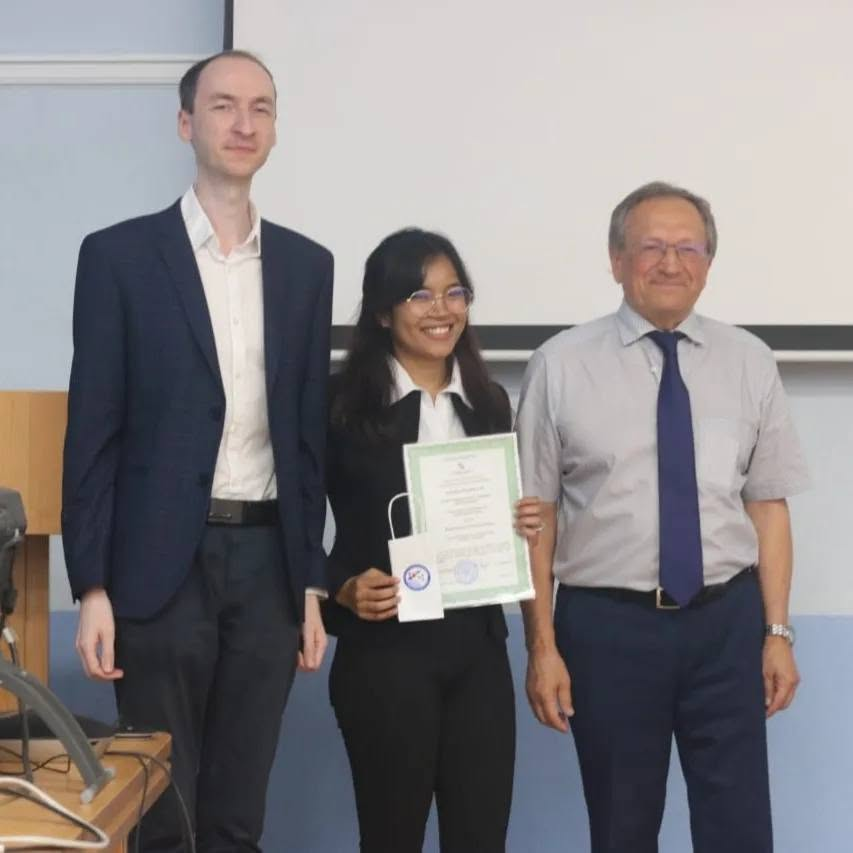
My appointment as a Research Assistant Officer at SHE ORBITS was another meaningful step. It allowed me to contribute to research organization, scientific documentation, and knowledge development while supporting a community that promotes women’s participation in space and STEM.
Science communication and mentoring have also become important parts of my journey. I have delivered talks and educational sessions on astronautics, satellite orbits, mission design, and STEM careers. I have supported students working on scientific projects and presentations, and I have served as a jury member for the Gen’Youth 2025-2026 program through Ikala STEM Chapter Europe.
Finally, my admission to the Master’s Program represents the next major step in my development. I want to deepen my technical knowledge and eventually contribute to building sustainable expertise in satellite mission analysis, operations, research, training, and applications for Madagascar and Africa.
Who are you outside of the walls of aerospace engineering?
Outside engineering, I am a wife, a mother, a friend, and a naturally curious person. I enjoy spending time with my family and friends, watching movies, dancing, and singing. Recently, I started learning musical instruments, which has been a fun way to challenge myself creatively.
I also love cultural events and performances. While living in Russia, I got opportunities to attend an opera and a musical. These experiences allowed me to discover new forms of art and appreciate the culture around me.
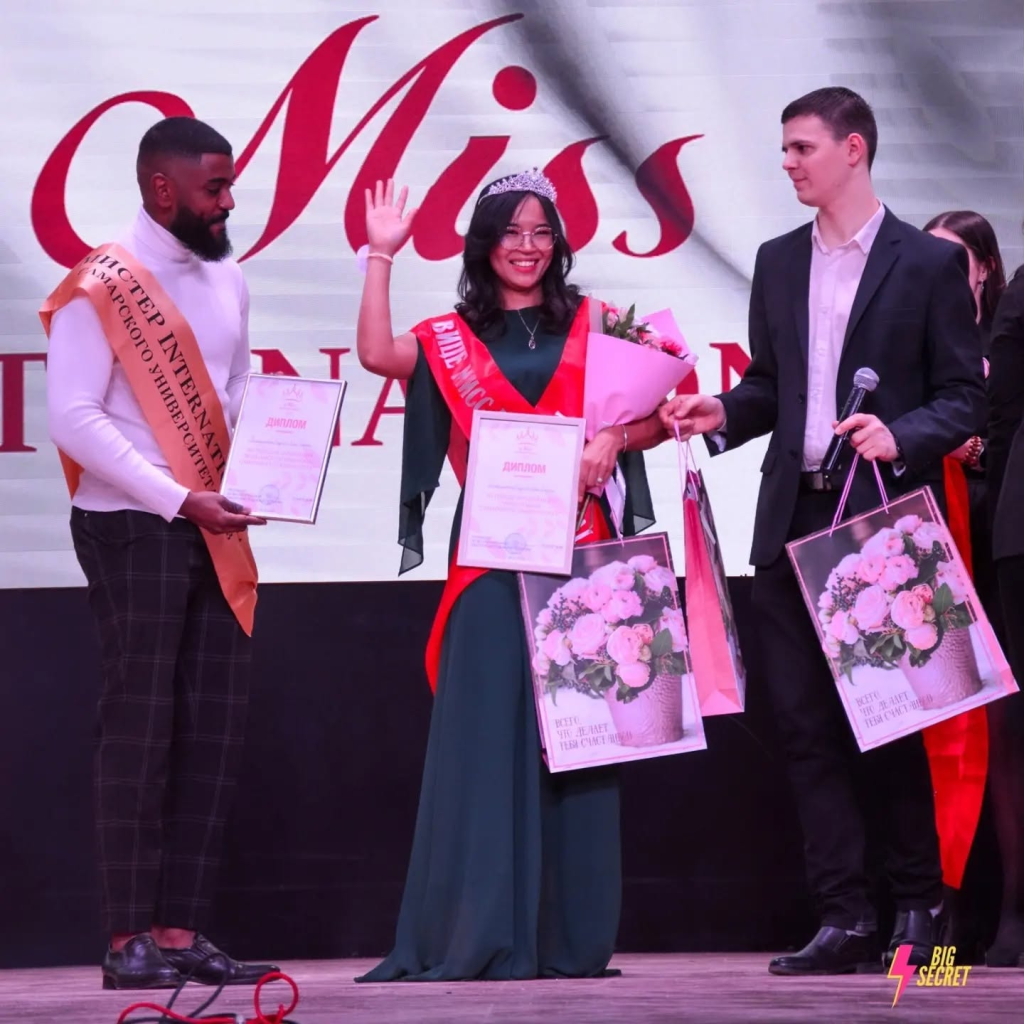
Placing myself in unfamiliar environments and seeing how far I can grow. One example was participating in my university’s Miss International competition in Russia, which I eventually won. It pushed me beyond my usual comfort zone and helped me become more confident.
I love listening to people’s stories because I believe every person is complex, unique, and shaped by experiences that others may not immediately see. For me, one person means one story worth discovering.
I also enjoy traveling, exploring new cultures, and trying good food wherever I go.
What is your favorite quote?
“Nothing in life is to be feared; it is only to be understood” ~ Marie Curie.
This quote reflects the way I approach science and uncertainty. Fear often comes from what we do not yet understand. But knowledge helps us ask better questions, make informed decisions, and face challenges with greater confidence.
What is your word of encouragement for a young girl interested in aerospace engineering?
You do not need to grow up near a space agency or come from a country with a long history of space exploration to belong in aerospace. Begin with your curiosity. Ask questions, read, search for opportunities, and learn mathematics and physics patiently. Explore the many professions that contribute to every space mission.
A satellite is not created by one type of professional. Space missions need people from various fields. For example, mechanical and electronics engineers, programmers, mathematicians, physicists, data scientists, communication specialists, researchers, project managers, lawyers, educators, and many others.
Do not assume that finding a subject difficult means you are incapable. Engineering is challenging because it teaches you to solve problems that do not always have immediate answers.
Finally, you may change direction, experience interruptions, or take longer than expected. What matters is that you continue building your knowledge and looking for opportunities. Your country, gender, age, or background do not disqualify you from contributing to science. There is room for your intelligence, perspective, creativity, and questions in STEM.
It has been such a wonderful time with you, Larissa. Thank you for sharing about your work in aerospace engineering. We wish you the very best with your next academic journey.


2 Comments
Proud of You Larissa Ramaromanana 🥰
Let’s go 🙏. NEVER GIVE UP
Thank you so much 🥰🙏